

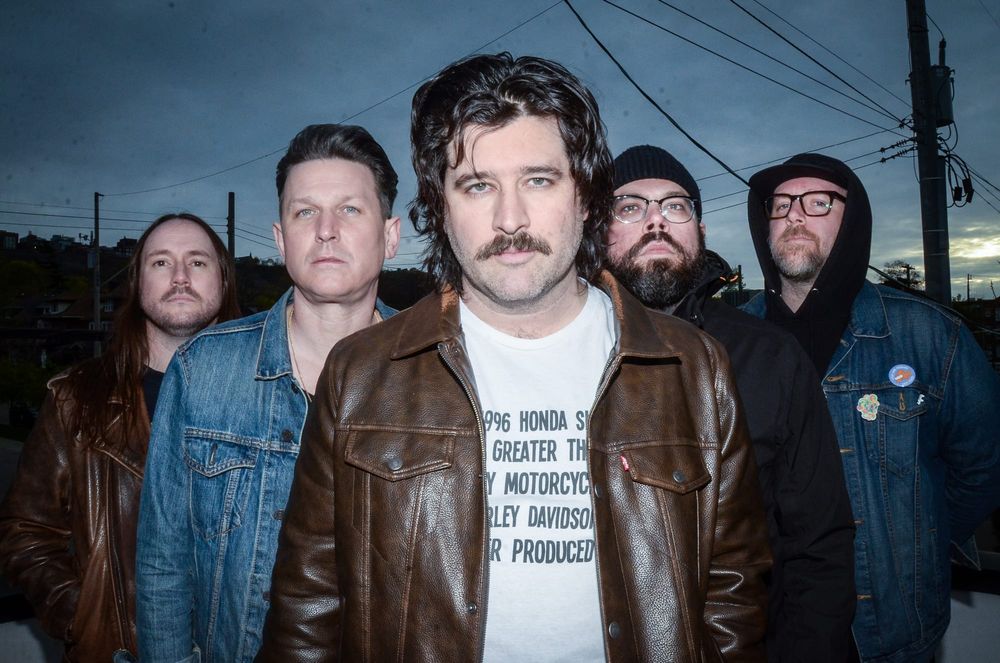
Dead Tired has always moved according to its own rhythm. Between demanding careers, touring schedules, recording projects, and everyday responsibilities, the Canadian band has built something that exists outside the usual pressures surrounding a release. Songs are given time to develop. Ideas are explored from every angle. The process is rooted in trust, friendship, and the belief that the best moments often come from letting things unfold naturally.
That approach can be heard throughout Hornets of Fall, a record that captures a band fully connected to its creative instincts. Recorded and produced by Marco Bressette at Deadquarters Studio, the album reflects the freedom of working in a space where experimentation is encouraged and every strange idea has room to find its place. Moving through hardcore intensity, noise rock chaos, and massive riffs, Dead Tired sounds like a band that understands exactly how to challenge themselves while staying true to what brought them together.
Featuring guest appearances from Liam Cormier, Andrew Neufeld, and Chris Cresswell, Hornets of Fall also highlights the community that has surrounded Dead Tired from the beginning. We spoke with vocalist George Pettit and guitarist Franz Stefanik of Dead Tired about the creative process behind Hornets of Fall, the friendships that have kept the band together, and how their shared history continues to inform the music they create.
MSM: Hornets of Fall was recorded and produced by Marco Bressette at his studio. How does having that level of in-house control change the dynamic and pressure when you’re piecing an album together?
DEAD TIRED: Having the luxury of an in-house studio is a major perk of playing in this band. We can work around all our busy schedules so no one has to take time off work. We also get the opportunity to record and digest it. It gives us a chance for trial and error (no idea is a bad idea), time to get weird, add fun stuff, and try things out without the pressure of wasting someone's time or being on the clock. The meat and potatoes, however, are treated very seriously, as being in the studio should. [There is] well rehearsed and prepared playing, but after that's all done, the fun begins: secondary percussion, noise, sounds and ideas emerge. With a non-judgmental space and good environment, this is how everything seems to come together.
You've mentioned that you purposely slowed down your process for this record to let the songs "ferment before letting them breathe." How did that patience change the final product compared to your previous releases?
The nice thing about this band is that we are not in a rush to produce something for the sake of it. Letting stuff sit with the draw to complete, it makes it seem more worthwhile. [Being] individually and also band-motivated, driven to complete tracks (which is super fun [and] keeps recording exciting), and also getting to hear what everyone's been adding to help build the songs makes it always exciting.
The new album is described as your heaviest and most confident record yet. Was there a specific moment or track during the writing process where you realized you were pushing the intensity to a new level?
[Hornets of Fall] is technically the first record written as a full band since the first record. [Our drummer] Theo did not play on "Satan Will Follow You Home" nor was he involved with the writing process. For this record, we organically jammed and sculpted the songs together as a whole. [We] recorded demos, rearranged parts, and then laid down at the studio collectively. The confidence comes from the group of players and creative input given between us, so it feels good.
The record features an incredible lineup of Canadian punk and hardcore royalty, including Liam Cormier, Andrew Neufeld, and Chris Cresswell. How did these specific guest appearances come together? And what did they bring to the tracks?
We have all played shows together and hang out outside of band-related stuff on the regular, so having your friends be a part of something you are doing is super cool. Hearing the voicing of stuff written from a different perspective [and] in the voice of peers you admire is super rad. The features kind of just chose themselves once the final vocals were done. Suggestions of who was on each track just seem to make sense with the cadence of how the track was already shaping up. [We are] happy to have so many rad friends from great bands be on it. Shout out Cancer Bats, Comeback Kid, TV Freaks, and The Flatliners / Hot Water Music.
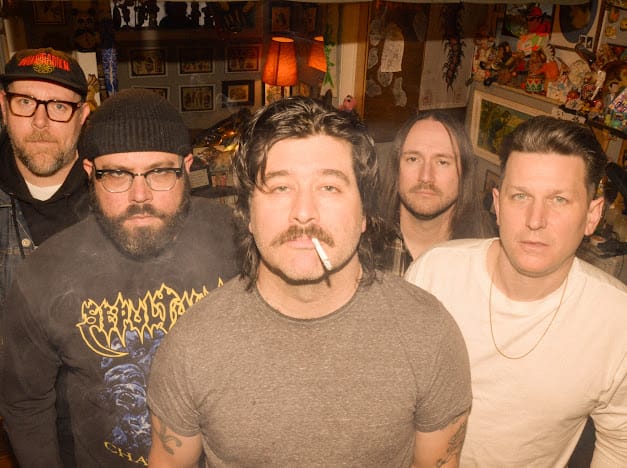
Dead Tired started as a passion project between friends balancing arena tours, tattoo shops, and recording studios. How do you manage to shift gears from those commitments back into the raw, uncompromising energy of this band?
Playing music for anyone should be a positive escape from reality, no matter who you are. We all have so many outside-of-band obligations going on, so when we get together to jam, we harness the energy and just give 'er. Playing angry, chaotic music is a great vessel to let it out.
It's been mentioned before that Dead Tired serves as a vehicle for some pretty misanthropic lyrics, especially on tracks like "Edge of Entropy," which dives into watching the world collectively make the wrong decisions. As a band, do you find writing and performing around these frustrating societal themes therapeutic? Or does it feel more like you're holding up a mirror to the chaos?
I feel like on most days I pendulum between the idea that people are intrinsically self-serving, and the idea that society, on a whole, bends towards civility. Basically, people are good and people are shit. It's easy to stand back and sneer at a world that has been corrupted by greed and apathy, [but] it's not how I feel most of the time. Mostly, I feel peace is a more true state than whatever new horror is being shown to me any given day. But there's always a seed of cynicism in there that doesn't take much to grow. It might not always be the most heroic stance to take, but it's a stance that I feel the need to acknowledge creatively.
With a title like Hornets of Fall, there's an immediate sense of seasonal decay and aggressive energy. What is the overarching concept or mood you wanted to capture with this album title?
I think that's accurate—seasonal decay and aggression. I was stung by a hornet a few years ago and it got me thinking about drunken fall bees and hornets: the honey has all been made, there [are] no flowers left to pollinate, no need to produce anything, no need to protect the queen. All that's left is the sting. It became an idea that I tethered some of my writing to when we were making the record. At one point, it was almost a concept record about a hornet's nest being consumed by a forest fire. That ended up being a little too ambitious.
The album bio teases that Hornets of Fall has something for everyone, whether they want it fast, slow, or demand a massive riff. How do you balance all of those different sonic desires without losing the core, chaotic noise-rock identity of the band?
Everyone in the band contributes ideas based on personal taste, and we all enjoy a lot of the same things. We always take into consideration what we listen to and like, and try to incorporate inspiration from different music genres and vibes. Then when [we are] arranging song flow, it's nice to have a balance and flow of fast, mid tempo, slow and groovy, [then] back to chaotic. And [we] just try and take the listener on a musical wave of ups and downs. Luckily, with the years of jamming and hanging together, even though some songs can sonically sound so different, they all seem to find their place and sound like a Dead Tired song.
Looking back at your journey from your 2015 self-titled album to today, how do you think the punk scene in Hamilton, Ontario, has shaped the evolution of your sound?
As we get older, we seem to feel less and less connected to the current punk scene, and don't mean that in a bad way. It's nice to see new bands with young talent take what they grew up with and now be the new life into what makes the Hamilton scene cool. We're always trying to go check out local shows and see what's new even though we are the old guys now.
The bio for the album mentions you guys actually spend way more time hanging out, eating fancy dinners, and smoking cigars together than you do practicing. Is that friendly vibe one of the secrets to why the band has lasted this long?
The band is an excuse to make a racket. The band exists based on our close friendship. The heartbeat of the band is our jam space, which is a common place for us to just hang out and enjoy each other's company in the privacy of our own world. Not at a noisy bar or show, just good 'ol fashioned friend hangout chill zone.
Now that these 12 tracks are about to be "sent off into the digital ether" with no turning back, what are you most excited for your fans to experience when they hear the record in full?
The way music is digested these days and consumed is so far off from what it used to be. So we're excited for people to listen to the record in full and, as stated earlier, enjoy the wave and ride. We feel there's something for everyone in the record sonically; it will be cool to see what people navigate towards as there are so many different vibes through the record. From showing a few friends the record everyone has had their own favorite tracks and so far a lot of them have been all different.