


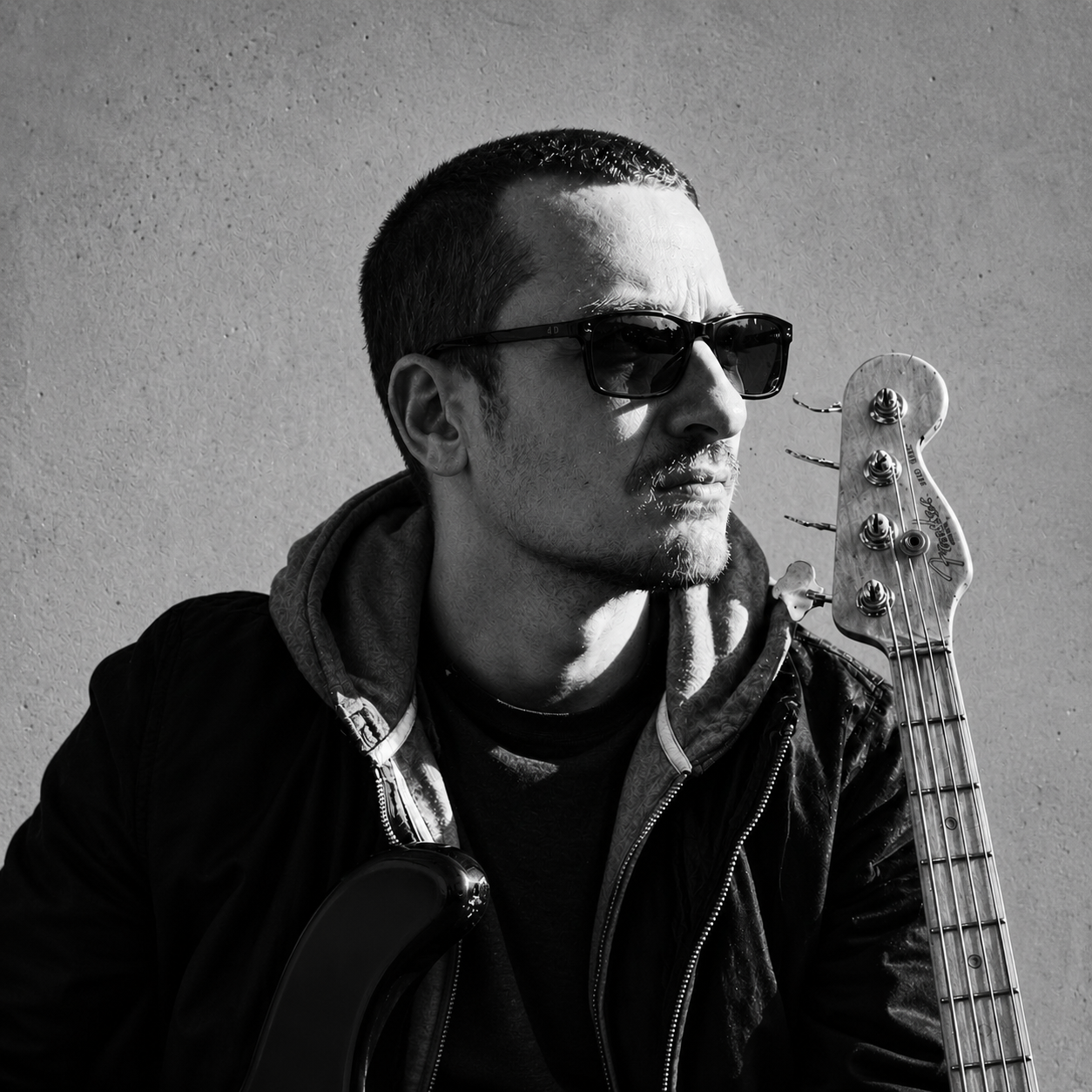
Every Eileen Noise song begins with something that lingers: a memory, a conversation, a loss, or a feeling that refuses to let go. For songwriter and multi-instrumentalist Marco Marroni, music has become a way of preserving those moments, giving shape to memories and emotions that might otherwise fade. I talked with him about growing up in Rome, building Eileen Noise, the meaning behind “Just a Body,” and the deeply personal philosophy that guides his work.
MSM: For those just being introduced to Eileen Noise, what do you want them to know about this project?
Marco: I think the most important thing to know about Eileen Noise is that it’s a very personal project. I write the songs, play the instruments, arrange the music, and build the stories behind it. Even when a song is told through another voice or character, the emotions behind it are real.
Every song starts with something that stayed with me: a memory, a conversation, a loss, a place, or sometimes just a feeling I couldn’t shake. At its core, Eileen Noise is about human stories and all the things that make us who we are. It's about imperfections, nostalgia, relationships, grief, hope, and all the things that make us who we are. I never wanted it to feel like content. I wanted it to feel like music made by someone who genuinely has something to say.
How did your relationship with music begin?
Music has been part of my life for as long as I can remember. My father played guitar, and there were always instruments around the house. One of the bands he listened to most was The Shadows, and what fascinated me was how they could create emotion without relying on a singer. The melodies themselves told the story.
Eventually I picked up a bass guitar myself, and once that happened, there was no turning back. I spent years playing in bands, rehearsing in small rooms, carrying gear, playing clubs, making mistakes, and learning from them. What kept me going wasn’t the idea of success. It was the feeling of creating something that didn’t exist before.
Where are you from and how has that environment shaped the way you write and remember music?
I grew up in Rome, but not the postcard version people usually imagine. What stayed with me were the ordinary places: quiet streets at night, long drives, bars, lakes, train stations, rehearsal rooms, and family gatherings.
A lot of my songs come from observing everyday life and finding meaning in details that most people would overlook. The landscape that probably appears most often in my music isn’t a physical place. It’s memory itself.
What did a solo project offer you creatively that you couldn’t find within a traditional band?
Playing in bands gave me some of the best memories of my life. I learned how to perform, work with other musicians, accept criticism, and build something together.
At the same time, every band involves compromise. Eileen Noise gave me the freedom to follow an idea exactly where it wanted to go. What surprised me most was discovering how personal the music became once every decision was mine. The songs started reflecting my memories, experiences, and way of seeing the world more directly than ever before.
Where did the name “Eileen Noise” come from?
Eileen Noise is not a real person, but she's also more than just a name.
The name itself came from a contrast that has always fascinated me. "Eileen" sounds delicate, intimate, and almost fragile, while "Noise" suggests something loud, rough, imperfect, and powerful. In many ways, that's exactly the balance I try to find in my music.
Over time she became a symbol of the emotional side of the project. A way to tell stories that aren't limited by my own face or biography.
I never wanted Eileen Noise to be a traditional frontperson. She's closer to a character that exists somewhere between memory, imagination, vulnerability, and music.
Different listeners interpret her differently, and I actually like that. I think some things are more powerful when they're left open to interpretation.
What has shaped your approach to writing?
I’ve been writing in one form or another for most of my life. I’ve always admired artists who can be honest without explaining everything.
I’m fascinated by what remains unsaid. Sometimes the things we don’t talk about reveal more than the things we do. My father introduced me to music, and we shared a strong understanding that often didn’t need many words. Music became a language of its own between us.
Most of my songs start in Italian. I write the emotional core first and only later translate it into English. For me, the feeling always comes before the words.
At the heart of “Just a Body” is the idea that being valued for appearance rather than identity can leave someone feeling invisible. Was writing it a way of exploring that loss of self?
Absolutely.
“Just a Body” came from thinking about how often people are reduced to an image rather than seen as complete human beings. The song isn’t about one specific person. It’s about a feeling that many people experience: the sense that others are looking at you, but not really seeing you.
I think those pressures have become even stronger because so much of modern life happens through screens. The song was my way of exploring what gets lost when appearance becomes more important than identity.

Some critics might ask why you choose to work with contracted or digital voices when you're a capable songwriter, producer, and artist in your own right. What draws you to those alternative voices, and what do they allow you to express that might be harder to communicate through a more conventional presentation of self?
I’ve never been interested in hiding behind technology. The songs come first. The emotions, lyrics, instruments, and experiences behind them are all mine. What changes is the voice through which those stories are told.
Sophie was never created to replace me. She became a way to separate the story from the storyteller. Through Sophie, the songs can exist in a more universal space.
I understand that some people focus on the technology, but I’m far more interested in the emotional result. No one cries because of a microphone, a guitar, or a piece of software. They cry because a song reminds them of something real. For me, that’s where the value of art has always been.
How did your collaboration with Leeloo come about, and what did her voice bring to Eileen Noise?
Leeloo discovered my music and reached out to me after hearing one of my songs. What struck me immediately was not only her voice but also her professionalism and musical sensitivity.
When we worked together, she brought a completely different energy to the songs. There is a warmth and humanity in her voice that naturally changes the emotional color of the music.
I think collaborations are interesting because they force you to see your own work from a new perspective. That’s exactly what happened with Leeloo.
One thing I find especially compelling about your songwriting is how vividly you capture the female experience. Did that perspective come naturally to you, or were there strong women influences in your life or experiences that helped shape that outlook?
I think it comes more from listening than from trying to write from a female perspective.
I've been surrounded by strong women throughout my life. My mother, my sisters, my wife, friends, and colleagues. I've spent a lot of time listening to their stories, their frustrations, their fears, and the things they carried quietly without always talking about them.
As a songwriter, I've always been interested in people more than characters. I like observing how people react to love, disappointment, loneliness, expectations, and the pressure of being seen in a certain way.
Many of the themes that appear in my songs aren't exclusively female experiences. They're human experiences. But sometimes women carry those experiences differently, or more visibly, and that has always interested me as a writer.
I don't approach a song thinking, "I'm going to write from a woman's point of view." I start with an emotion, a situation, or a story that feels real. Then I try to follow it honestly wherever it leads.
If those songs resonate with women, I take that as a huge compliment because it means I've managed to capture something truthful about the human experience.
What have been some of the most meaningful responses you’ve received from listeners so far?
The most memorable responses are usually the most personal ones.
People have written to tell me that a song reminded them of someone they lost, helped them through a difficult period, or expressed something they couldn’t find the words to say themselves.
Those messages mean more to me than any statistic or number. When someone tells me that a song became part of their life story, that’s probably the greatest compliment I can receive as a songwriter.