

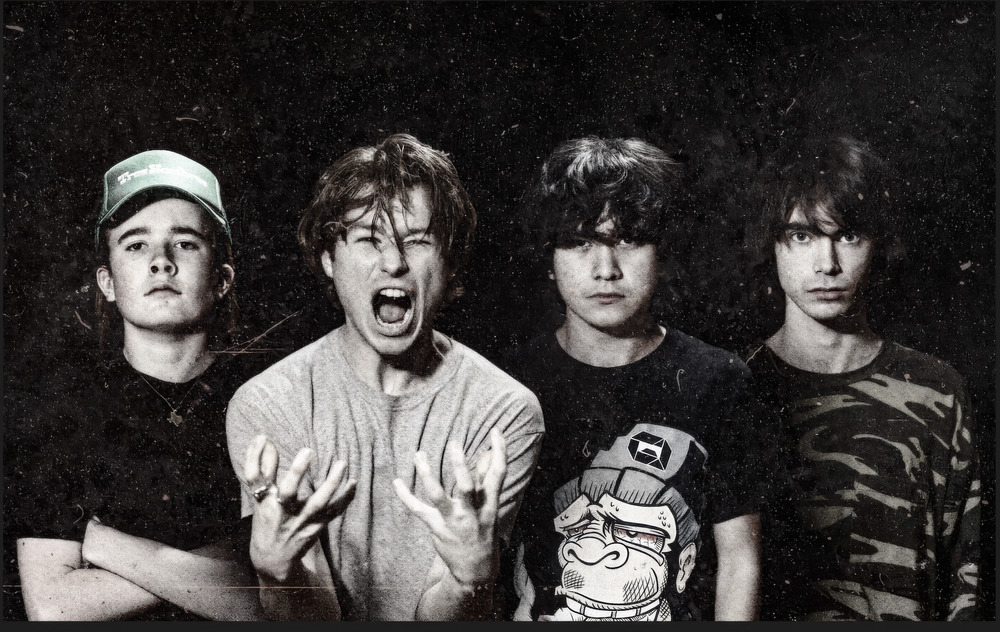
We have all been young before, no matter how long ago it was. We all have memories of our “teenage angst.” Those are the days a lot of us wish to forget or bury as if they were a mistake. But for this band from Venice Beach’s hardcore punk scene, they are doing the opposite. They are putting that angst to good use, channeling it into a sound that’s as raw as it is refined.
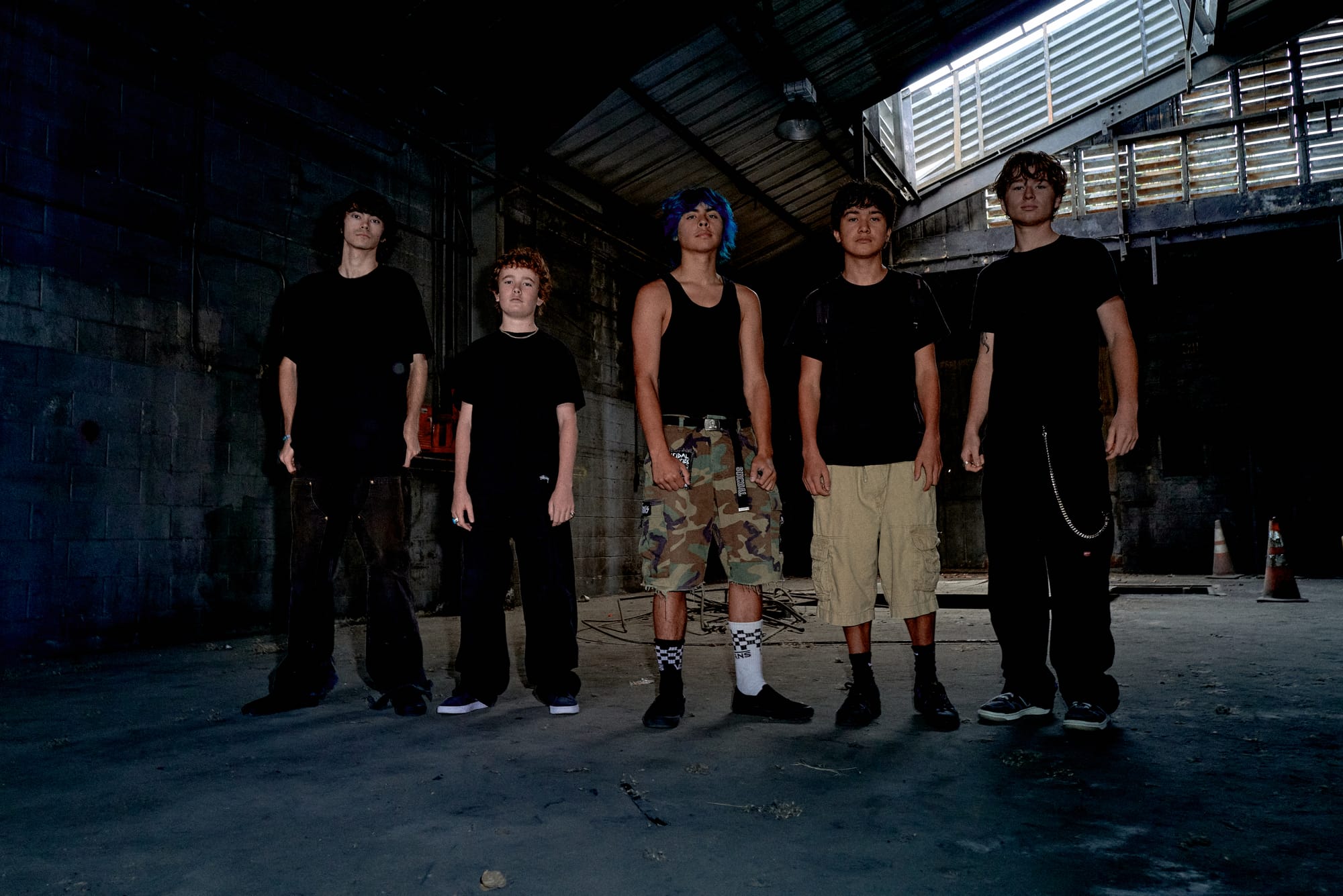
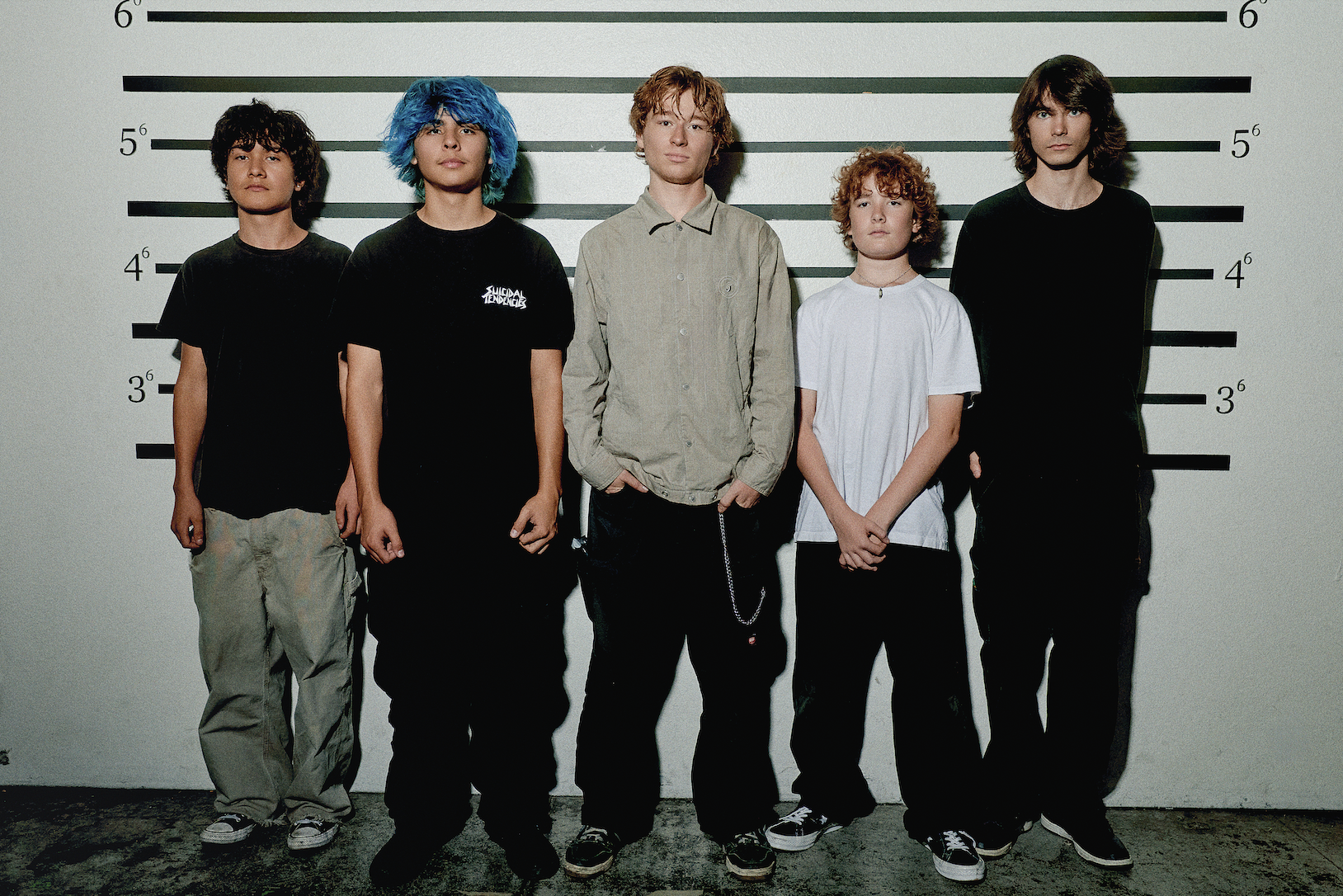
I got the chance to talk to the next big band on the lineup, XCOMM. Formed in 2023, this band consists of frontman Michael Gatto, bassist Adan Escoto, guitarist Eric Matt, DJ Hunter Grogan, and drummer Revel Ian. They are young, loud, and ready to speak up.
MSM: How has growing up in Venice Beach influenced your music?
Michael: Oh man. During COVID, when the world shut down, I remember in 2021 they started doing DIY shows in the street, and I would go to all of them. From there, I started renting out my PA system and helping the bands. This was around 2022 or 2023, and we started helping some of the older punk bands who had been around since the eighties and nineties, and even longer than that. Talking to them and hearing stories about what the scene was like, when Suicidal was doing stuff in Venice, and all these bands from the same area were playing shows together, was definitely inspiring. From there, we started booking our own shows and hitting up West Side-only bands. It definitely influenced us a lot. I feel like it influenced the way we think about the scene more than the music, but that legacy is definitely there.
Awesome. Revel, anything to add?
Revel: I’m not directly from Venice, but I’ve been going there my whole life. I went to school on the West Side a lot, and getting a glimpse of the bands Michael grew up with, and the people around them, showed me what the community aspect was really like. It was like, “Whoa, there still is a scene over here.” There’s a community of people who all have each other’s backs, and I thought that was really cool. That definitely influenced us.
What was it like to create music with a legend like Ross Robinson?
Michael: When we did our demo tape with Roy Mayorga, we released it and played a show at Hotel Ziggy in Hollywood. We reached out to Ross through a family friend, not expecting him to actually show up, and I remember looking at Revel.
Revel: I remember seeing him to the right of me while I was playing drums, and I couldn’t believe it was Ross Robinson. His jaw was dropped open, and it was really odd. I couldn’t believe he came, because we knew him through Michael’s uncle, or something like that.
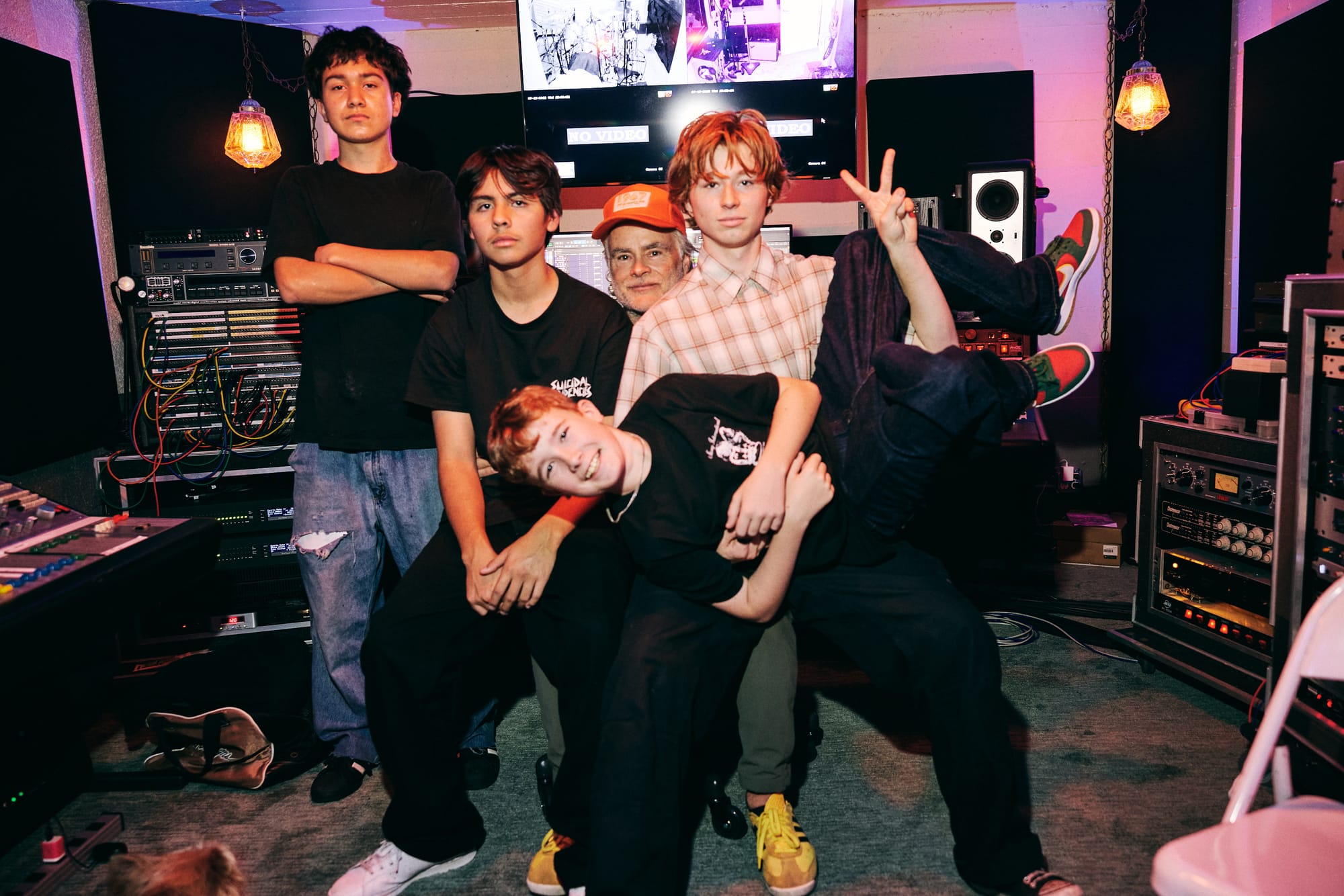
Michael: Yeah, it was a shot in the dark, so for him to show up was amazing. He came up to us after the show and was like, “Let’s do a record, let’s do it.” We signed to his record label after that and started working on the record. We had a lot of skeletons ready to go, but after months of pre-production and recording, we finally have the record out, which we’re super stoked about. We had it in the hole and we’ve been releasing singles every month, but now the full record is out. It was truly an amazing experience. We were doing ten-hour days there every day, including weekends, even when I was sick.
Congrats on your first album drop. What goals does the band have moving forward with this album and in general, now that you’ve tasted a little bit of success already?
Michael: Oh man, thank you. We’re stoked that the record is out. Having people listen to it, learn the lyrics, show up to the shows, and say, “Hey, I saw you guys and I’m not missing a show ever from that first performance,” has been truly amazing. We want to tour a bunch, play a lot more shows, and just keep doing it. We’re together almost every day writing new songs and getting stuff going, so hopefully we play more festivals, get on cool tours, and do a lot of shows this summer.
Revel, anything to add?
Revel: Yeah, I think I just want to play a lot more shows.
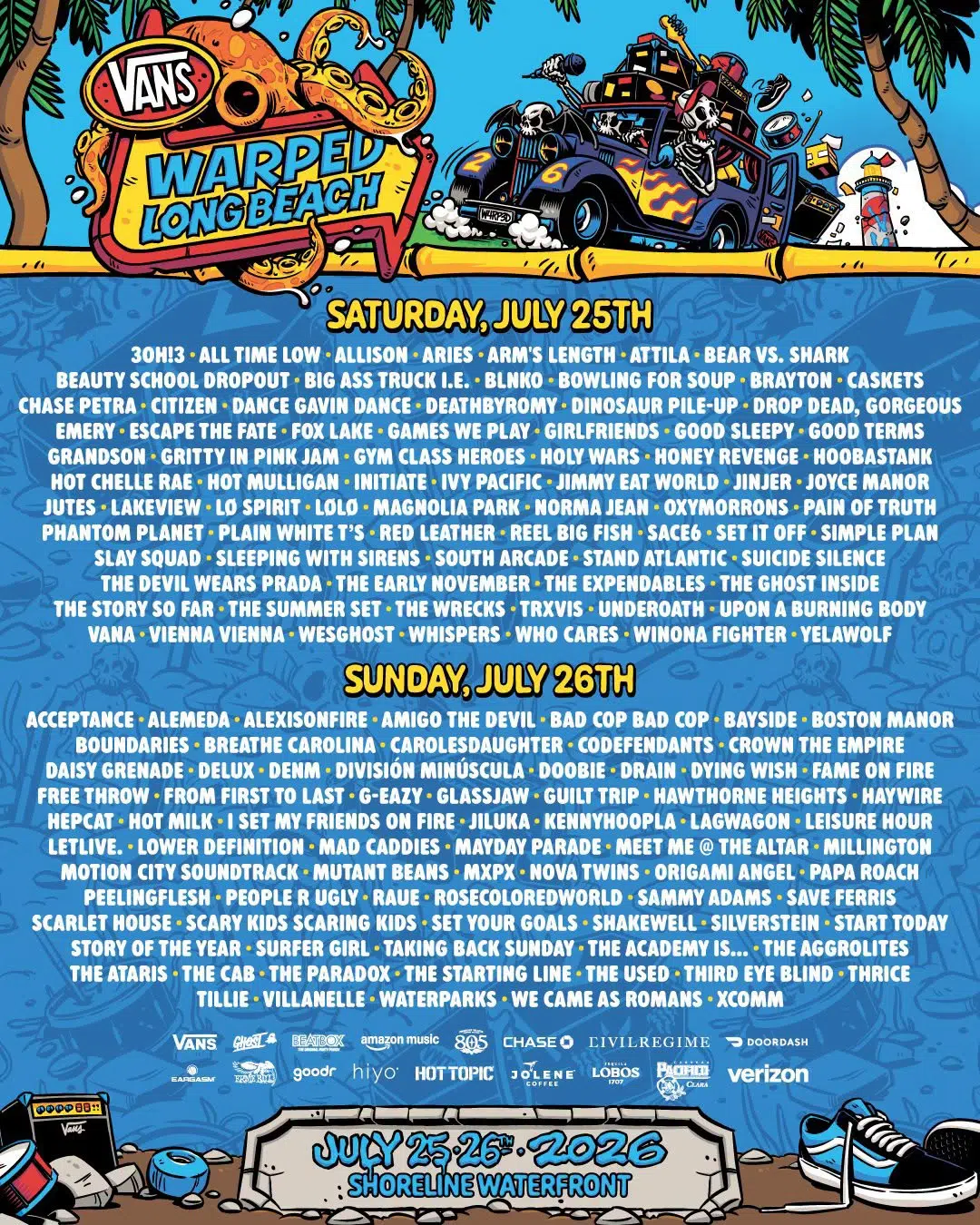
Michael: Yeah, we love playing live, and we’re playing Warped Tour this weekend for our first time on the East Coast. We’re really excited for that one as well.
I heard, and you’re also playing next month in California too, right? Are you excited?
Michael: Oh man, we’re flying in on Saturday, and we’re going to go to the festival Saturday night and check out some bands. To be playing with bands that shaped our hardcore and musical influences in general is definitely going to be a trip. We were at Sick New World, and I was totally freaking out about being able to talk with more modern hardcore bands from the last five to ten years. Calling them “modern” is interesting, but it’s like talking to bands and saying, “Hey, I used to run the mile listening to your tracks,” and then you’re playing a show with them. It’s going to be so cool. Hopefully I’ll be able to check out a lot of our friends’ bands and see a bunch of music this weekend.
That’s great. Congrats on that too.
Michael: Yeah, it’s going to be really cool.
How are you trying to shape hardcore punk with your music? You mentioned some of the more modern bands and being involved with them in 2021, so how are you trying to shape modern punk music now? Are you trying to make it more mainstream, or is it more about seeing how it lands?
Revel: I would say we’re not really trying to change anything. I think we’re just doing what we do, and people like it. Every band that made a difference probably didn’t start out thinking their goal was to make a difference. They just did what they liked and went from there. I think we’re also on the same page about not being put in a box. If we’re writing a song, we write it. Having the opportunity to make whatever songs we want is enough. We have enough musical influences and a hardcore background to make sure all the songs are fast as fuck and heavy, but we don’t want to be in a box. If we’re writing something that isn’t stereotypically us, we’re going to follow it through and see what it becomes, because at the end of the day it will sound like an XCOMM song. We’re writing it, and we’re not strangers to strangeness.
That makes a lot of sense. I listened to both “Fake ID” and “Hot Pursuit,” and I was completely mind-blown by the range and versatility of both songs. So I can definitely see why you wouldn’t want to be boxed into one group or sound.
Michael: Absolutely. There are a lot of bands we all listen to that aren’t in one box, and they can change their sound over records while still maintaining their original sound. We were listening to “Love Is Not Enough” by Converge, and in my mind, that’s the closest thing to Jane Doe that Converge has put out recently. It’s so different and so evolved, but it doesn’t feel like they ever tried to do something because people put pressure on them to do it.
Revel: The sound just evolved, and now this is their biggest-selling record or something besides Jane Doe.
Michael: Yeah, that idea of letting the strangeness evolve is definitely a guiding factor.
What was it like opening up for Foo Fighters before your first album even dropped?
Michael: Wow. We released “Fake ID” that morning. I remember driving up to the venue, parking, grabbing all my bags, and walking into the spot. That entire day was amazing. We got up there, annihilated, and got the fuck out of there. I’m just stoked that people loved it. Looking into the pit and seeing all my friends annihilating in the Kia Forum was amazing.
Revel: I was glad people had reactions beyond just thinking we were great, because we were playing in front of that crowd. A lot of the Foo Fighters members, Nate, Dave, Pat, and even Chris, have backgrounds in punk and hardcore, but I would say their audience doesn’t really know them for that. They know them for Foo Fighters. So, to play in front of that audience and see a 45-year-old mom freaking out was the greatest feeling ever.
Michael: Absolutely scaring them off. Like, “You guys want to hear ‘Everlong’? This is 240 bpm.” It was pretty cool.
How do you think the band reacted to the music? Obviously, they wanted you there, but what was Dave’s expression when you were playing? Was he mind-blown?
Revel: We gave him the record before he put us on the show, and I remember his reaction being like, “Wow, this is great. This is really, really pure,” or something like that. He had a great reaction to Ross’s production, and then he put us on the show.
What are the advantages of starting to play music at a younger age?
Michael: That’s a good one. For us, I feel like when we did our record and came out of the studio, we were much better musicians. Our musicianship leveled up in a way that made us look at what we wanted to do for the next record, or whatever songs come next, with the knowledge that we had just made a record. We know what goes into it. We know the amount of work it takes. In my mind, a lot of younger musicians are good and know what they want to do, but they’re not always sure how to execute it. Right now, I feel like we’re open to anything, and we know how to execute it.
Michael: Rev, how do you think being a younger musician has shaped your musicianship?
Revel: I think I got a head start, because a lot of people start playing at the age I am now, but I started playing when I was six. So I feel like I had a little bit of a head start.
Who or what inspired you to become musicians?
Michael: Personally, when I was a little kid I saw a lot of different types of music, and I started playing guitar when I was eight. Looking at the performances I went to before then, I was actually talking to Revel about this. We went to see Brian Setzer from Stray Cats play. It was one of my first concerts, and funny enough, Revel was actually at the same show. His performance, the whole holiday show, was inspiring for a young kid and a guitar player. I saw Sabbath, I saw George Clinton, and there was so much music I saw before I started playing guitar. There must have been a memorable performance I can think back to before I was playing guitar, but I’ve been playing for so long that I almost can’t remember before that. I’d probably say Sabbath. I probably saw that and was like, “Tony Iommi, he’s the G.”
Revel: I grew up surrounded by music. One thing I’ve realized is that parents who force music on their kids will most likely end up with kids who never play music. You kind of have to grow up and figure out if you like it or not. It wasn’t forced on me at all, but when my mom was pregnant with me, she used to put The Beatles on and put headphones on her stomach, so I was listening to that before I was born. I got into metal super young, like five. I got my first kit at two, but I really started playing at six. Music has been around me my whole life, and it would not be the same at all if I didn’t have music in my life.
Michael: “Eleanor Rigby” in the womb. Pretty sick. A little “Here Comes the Sun” action, a little Neurosis action in the womb.
Revel: Not “Here Comes the Sun.” More like “Tomorrow Never Knows.”
Michael: No, no, “Dark Horse” by Converge.
Revel: “Dark Horse” by Converge, right after the womb.
Michael: Oh, I see. As a newborn.
Revel: Newborn, one month.
What does it feel like to be the next generation of musicians?
Michael: Oh man. I think it’s pretty fucking cool, to be honest. I really want to help younger musicians and help their bands. If we’re able to do it, it means other people are able to as well. There is a lot of dedication and hard work that has to be put into it, but the people who have it, have it, and the people who don’t, don’t. Personally, I want to be able to help younger musicians get their shit going.
Revel: I think it’s really cool to be a musician now, because it feels like kind of a lost art to have pure music with everyone in a room playing together. It’s really cool to be able to do that and influence other people my age, or younger, to do it too. Back in the day, you used to be able to go to school and talk about music, and there were people who listened to the same music as you. Now, trying to talk about hardcore with someone at school means trying to explain it to them. You might not even talk about it with someone, because to them it’s just banging and screaming. So, it’s really cool to try and put that into the universe more.
Michael: Well put. Very well put.
Are there any special venues or events that you’re excited to play besides the ones you’re doing already?
Revel: We’ll get back to you in a few months.
Michael: That’s a good one. We want to play more intimate venues, more small spaces. Stage dives seem right up our alley.
Revel: Yeah, I can think of some off the top of my head that I can’t say right now, but I think we want to play more intimate shows. Stage diving, no barricade shows.
To what do you attribute your recent rapid success?
Michael: Hard work.
Revel: Yeah, hard work and having fun. Never going into a musical situation saying we need to be successful, just doing what feels right. That’s definitely a success. If you’re having fun, it will most likely succeed. Even if it didn’t succeed, you’d still be succeeding in what you’re doing. We’d be stoked if we were just jamming in the room.
*interview by Kai Estrada and intro by Beau Lewis