

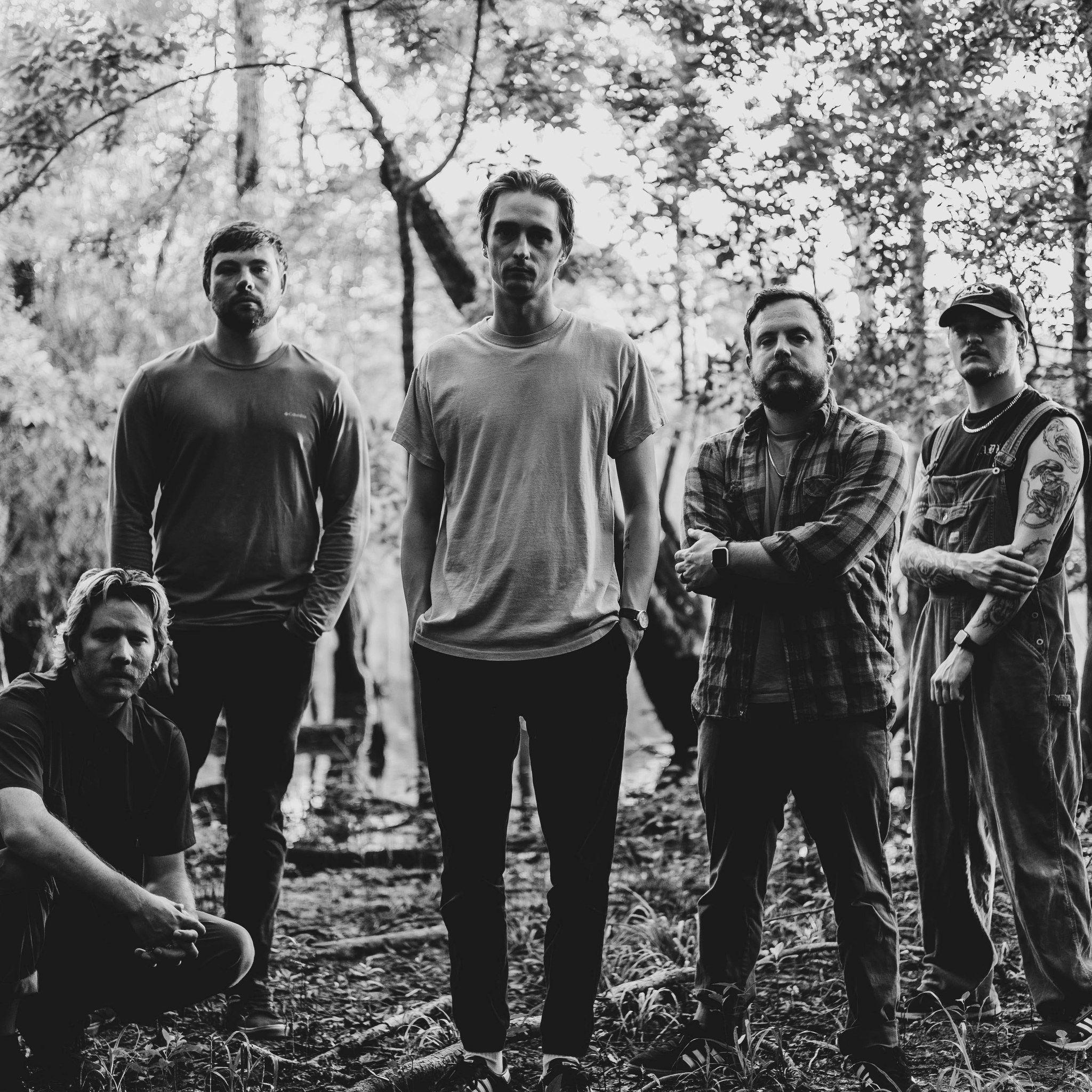
There are songs that you hear, and there are songs that you feel. Nashville-based idle threat creates the latter, all while striking the perfect balance of aggression with melody and chaos with control.
In this conversation, idle threat discusses the meaning and creation process of their latest album, "you’ll forget the sun," and so much more.
MSM: Diving straight into the album, "you'll forget the sun," it has a double meaning. So, the darkness of life making us forget the sun, but also the presence of God making that pale in comparison. So, how did those meanings shape the album, and is it (the duality) the theme for the entire album?
ZEKE: That actually came about in a funny way. Me and my wife, our first dance at our wedding was a song by Sting, but we danced to the Drew Holcomb and The Neighbors cover of it. And there is a lyric in that song that says, "you'll forget the sun." So, we had that hanging up in my room in my house that we were writing in, and Ernie saw that. I was like, "Man, that's really cool." So Ernie brought that up. And then we started talking through what that means in light of just our faith and in our lives. And this whole extra meeting started coming out of it in our conversation. And then we were like, wait a minute, that's really cool. We want to follow that. And so it is definitely a thread throughout the whole album.
That's a great story! And then, so, you recorded this in your hometown with Stephen Keech of Haste The Day. How did working with him shape the album? Was there anything in particular that he brought to it with his expertise?
ERNIE: Totally. Working with him was way better than we could have imagined. I mean, we had worked with him before, but not in this capacity. I want to say it was 2016 or '17; we put out a standalone single that he mixed for us, but it really wasn't until the door opened up to work with him this time. We had a limited availability in terms of being able to go somewhere and record, so we were definitely looking for somewhere here at home. So, just from a logistical standpoint, that really allowed us to put more time and effort into polishing these songs before we even got to him with them. But then, once we had done all the pre-production, I felt like we were in a good spot. Keech really came alongside and polished out the rough edges. Yeah, he really just joined the band as an additional member. And I think one of the things that was the most attractive quality that he has that we were really looking for was some more of the ambient things that you hear production-wise, because his background is in ... Well, obviously, he plays in Haste the Day, but professionally, he does a lot of commercials and soundscape-kind of things.
And so we just had gaps in the record that we wanted to be able to fill with his expertise that maybe we couldn't have come up with on our own. So yeah, it was a combination of just being really well-prepared on our side and then letting him work his magic to out the songs.
Yeah. And then, with "evermind," was writing it a form of catharsis, or does it feel like you're reopening a wound when you hear it? Does that make sense?
ZEKE: Yeah, I think so. It doesn't feel like reopening a wound. The song, it's about losing a young loved one, but the picture, the mind picture that I had while I was writing those lyrics was a parent losing a child. So in the more specific sense, I have not gone through that, but in the general sense, I have lost friends very young. I lost a friend when I was 21, and that was during a time of your life where you thought that could never happen. So, there are ways in which it does, but not in the most specific sense. Does that make sense?
Yeah, absolutely. And the way that you wrote about it, though, I mean, you would never know. You did a really good job with that.
ZEKE: Thanks. I appreciate that.
Was there anything about the music video in particular that you wanted to represent the grief? How did you bring that to life?
ZEKE: Yeah, I think there's some things we wanted to do in the music video that we didn't quite get to do, but I think I can't say enough about Josh and Garrett and all the guys that worked on the video or how good they did. They did a great job. But there's one little scene where you see me walking throughout the house and there's one part where I pick up a little bunny and that's clearly supposed to be a child's toy. So, that's kind of hinting at the absence of that child. And then there's that lyric in the chorus that says, "I can feel your absence surround me. " So, there's kind of that hinting at that grief and that loss in the video.
Yeah, definitely. That's a powerful line. So, you have Garrett Russell and Steven Keech featured. When you were writing the tracks, did you have them in mind from the start that you were going to bring them into the project?
ERNIE: I wouldn't say from the very beginning. So, we have four features on this record, which isn't so uncommon these days, particularly in hardcore; it's way more prevalent. For us, really what it was is we had about two songs that we knew we wanted to have guest vocals on. One of them was "with or without," which has Garrett Russell, and we knew that song in particular was going to have somebody, and he was one of a few names that got brought up. And then we just knew we wanted to have Stephen Keech at some point, and it made sense because we were in the studio with him and he was willing. So, we certainly didn't force anything. If we found a spot that Keech would fit on, we would have him do it. And the more and more we sat with some of these songs, we just kept talking about, "What if we put somebody here? What if we put somebody there?" And so, yeah, we have Steven Keech on "in tandem," and he just sits perfectly in that song. "with or without" has Garrett Russell, again, just a more unique spot. So, his voice really adds to that part. We have Aaron Stone from My Epic, and we have Christian Nielsen from a band called Meadows. So, a bunch of features, a bunch of friends, and the more the merrier were the mindset towards recording.
Do you know when you're doing them that you're like, I think we're going to bring someone in? Or is it after you listen to it when it seems finished and then you're like, well, maybe we could ... Like, at what point do you make that decision?
ZEKE: It's kind of both for me. What do you think?
ERNIE: I was going to say, I mean, I don't really think there were any parts that we recorded one of our vocals on that then got replaced with a guest spot. So, I think we had made decisions before we started tracking vocals. And it was just a matter of reaching out and seeing who was available and if it fit the timeline. But yeah, I don't think we heard it back, and we're like, man, this would be way better if it was somebody else. It was just from the get-go; this is written for them, and let's see if they're available.
Yeah. And then, of course, you may learn something new from who you're collaborating with, and then you reach people that'll listen to it based on who you've added, so you reach a whole new audience.
ERNIE: Totally. Even from a technical standpoint, I actually learned a new, I guess, yelling technique through Stephen Keech, who has been professionally trained by Melissa Cross. I got to experience it; obviously I didn't sit under Melissa, but I got some coaching from Stephen Keach, not on my original style that I use, but we tried some new things that I was able to ... I wouldn't have learned if it weren't for being in the room with Stephen Keech.
That's really cool. And so, you are on Tooth & Nail, which is just a legacy in itself. How does it feel to be on that label? Do you feel any pressure, or is it just an honor to be there kind of thing?
ZEKE: Maybe a little bit of both. I mean, it's definitely a really cool full-circle thing for us. I can speak for myself. It is, gosh, even before I got into heavy music when I was six years old, me and my brother loved The O.C. Supertones. We had a ska phase when we were five or six, and The O.C. Supertones was the band that we loved. And then it wasn't until later, when I was in like middle school or high school, that I started getting into heavy music and got into other Tooth & Nail bands that I never knew about. So just to be on the label, having grown up listening to those bands, is a really awesome full-circle moment.
So, your music is described as giving fans the space to scream alongside you. And you've toured with artists like Tooth & Nail legends Emery and Norma Jean. Have you picked up anything from those artists that helps you create that kind of environment for the audience? Or anything you've picked up from them, just in general, really?
ZEKE: Yeah. Oh yeah. Ernie, what do you think? Especially with Norma Jean, right?
ERNIE: Yeah, I mean, Norma Jean is probably a top three favorite band of mine of all time, even before touring with them. So, getting the opportunity to share the stage with them, you just pick up on what it's like. We come from a DIY background, and that's still very much ingrained in the fabric of our band, but when you see a band that's been doing it as long as they have and they're all put together as they are, it's really inspiring and it makes you want to just strive for excellence. And so, we learned a lot in that way. I think that already, we've always put it out there that this is sort of like a family band, in general. We've had several friends play with us fill in, but even beyond that, anyone who has come to a show, or has bought merch, or just said anything nice or whatever, just lent us their time ... We consider them just as much a part of this band as we are. And I think that when we write our songs, we're really just writing what we want and what feels natural to us, but the ultimate goal is that somebody would connect with it on a deeper level than just enjoy it. So yeah, I think maybe it's just that inviting people in to what we are doing in a very transparent way kind of creates that community-like feel. That's nice that that's how we're identified as. I don't think that we necessarily are always pushing for that, but that is a goal.
So, you formed in 2014. Looking back at "Grown Tired" compared to "you'll forget the sun," what is the biggest change you've had and how you've grown since then, musically and even as people?
ZEKE: Oh man, life is totally different than it was then. I can't think of a way I haven't changed since then. I mean, one way, I guess, I don't know. I was going to say my faith in Christ, but even there, I've grown in that. I'm married now. Ernie's married now and has a kid. I won't be surprised if there might be more of that coming down the road for more members. Gosh, we wrote another EP. We signed a record deal to an amazing record label that we all grew up listening to, put out our first full-length album, went on tours. I mean, everything has changed. And I would like to say that everything has changed for the better. I mean, I think we've grown as people and that has reflected in the band as well. There are ways in which it feels a little bit more pressurized. As you get older, you have more responsibilities and more things to take care of, but then there are other ways in which the band feels like less pressure than it used to be. And maybe it's just we just have become more comfortable with each other. And I don't know, it's gotten a bit older and not everything matters as much as it used to. But at the same time, some things matter more than they ever did before. So yeah, I guess in every way it's changed.
And then, the second part of that question: what hasn't changed about Idle Threat from the start? Something that's remained at the heart of the band. Is it being DIY?
ERNIE: DIY was never the ultimate goal, but it's so funny because it sounds like we're not giving straightforward answers, but the reality is when we started, the goal was always just one step forward, and it always has been that. When we started, it was just, let's write a song. And then it was, well, let's write a full EP and then let's play a show and then let's do a tour. So, it developed, but the goal was never, and has never been, to be huge or to sell out or to do any of that stuff. It was just always, "We just love this." And when I say this, I mean, we love making music with this group together. And so, as long as we're doing that, whatever doors open up and whatever successes or failures come our way, cool; we'll take them, we'll step through. And so, I think that that's probably still the mindset. Even today, looking back and being like, wow, we played some incredible stages with some incredible bands, but I think if we never get that again, we're all content. It's been a wonderful ride, and it's not over. We're still going to keep going. So, that's kind of the heartbeat, I think, behind what we do.
And then, if each of you had a theme song or an anthem, it doesn't have to be your own; it can be anything, but what would it be?
ZEKE: Honestly, I'm going to go the serious route. Man, I think there's a song by a band called King's Kaleidoscope from way back in the day. They wrote a song called "All Glory Be to Christ." And if anything could be said about my life, that's what I would want to be said. So, that's my theme song.
ERNIE: And then I'll go the not-serious route.
ZEKE: Go for it.
ERNIE: Yeah. Mine would just be Lil John's "Turn Down for What?"
ZEKE: That's good.
And then my last question for you - this one might be a tough one, too, I'm not sure. When people go see you play live, what do you want them to come out feeling? What do you want them to carry with them from seeing you play? Either emotionally, mentally, or even spiritually. What do you want them to bring away from it?
ZEKE: Yeah, I think one thing that I would say is just, man, that for a moment that their problems wouldn't seem so big and that they might believe that God really loves them, and that they might believe, man, those guys really care about the lyrics that they're singing. Those guys looked me in the eye and they treated me like I had a lot of value and they really cared and really connected and kind of forgot about everything because of the music and who we were singing about. I think those are the biggest things that I would say. What would you say, Ernie?
ERNIE: Yeah, I think that's a great answer. I think I feel really strongly about people seeing what we do and believing that they can do it too, or do whatever that is, whether it be art or just their nine-to-five or whatever it is. Because I remember growing up being inspired by a lot of local bands specifically and thinking, "Man, I want to do that. That sounds really cool." And so that, and then also the human experience is something to not run away from, and having people in your life to go through those things with, the hard things and the good things, are truly what life's about to me. So, exactly what Zeke said, and then just tag those things on.