

This interview has been edited for length and clarity.
Fifteen years is a long time to bet on yourself.
The day before the Nicotine Dolls self-titled album dropped, Sam Cieri told me he wanted to vomit. By the end of our conversation I understood why – when you've poured every ounce of yourself into something you've loved for so long, releasing it into the world feels like standing at the edge of the most uncertain waters.
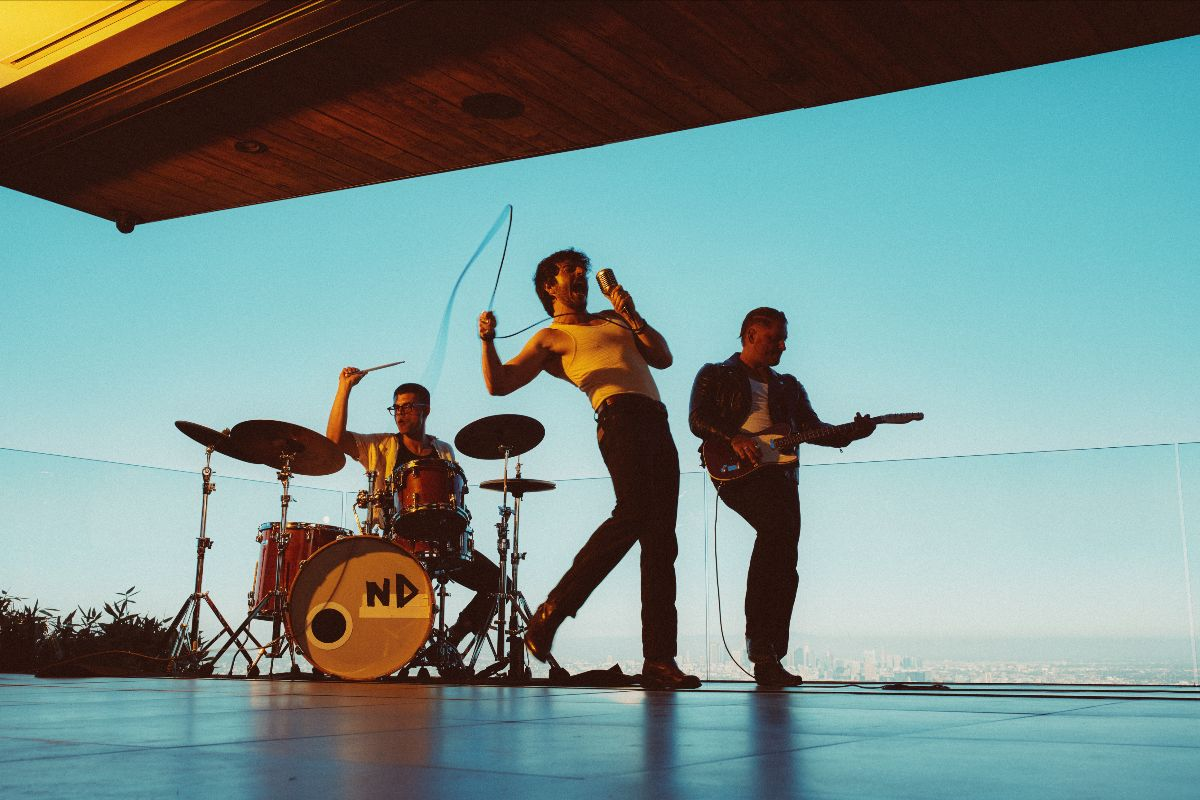
Sam Cieri is the frontman, lead songwriter, and visual director of New York City-bred rock band Nicotine Dolls. The road to get here reads like something you'd see in a movie, one of the ones that you find yourself crying to halfway through, proud of the lead character's insane story arc. He left home at 17 to pursue music full-time, busking out in the NYC subway for three years while eating off dollars and quarters. He quit making music at 22 after bad deals and burnout, then got into a motorcycle accident that led him to stumble into the lead role of a production of "Once," where he fell back in love with songwriting and co-founded the Nicotine Dolls in 2018. He worked six jobs to fund early recording sessions, lived out of a van, sold that van, and then scrapped a finished sophomore album. He lost friends over the fifteen years it took to get here, and listening to the album, you feel every moment as if you were there beside him.
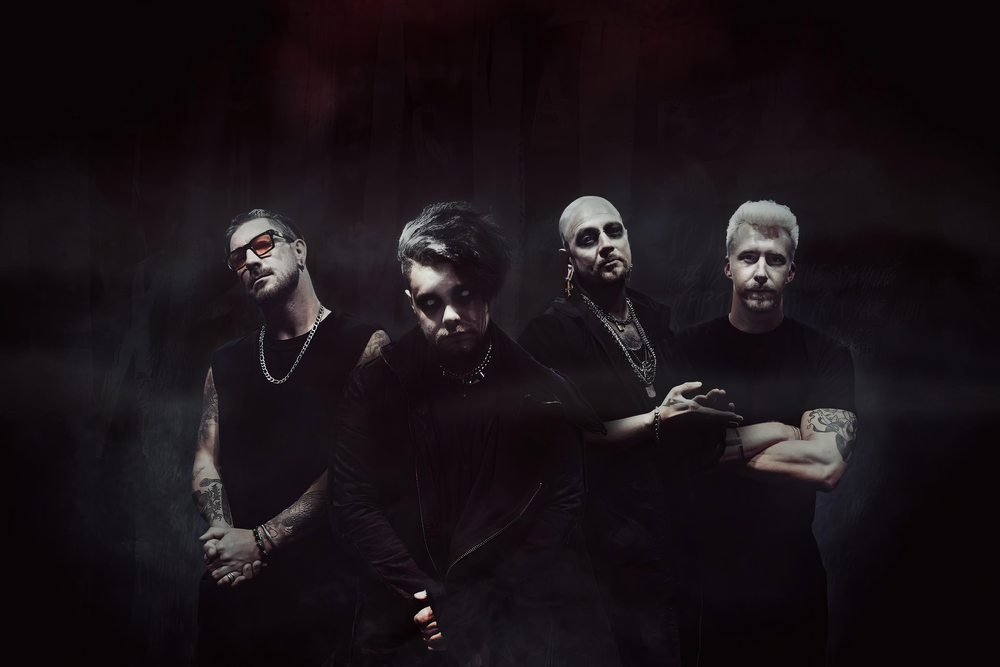
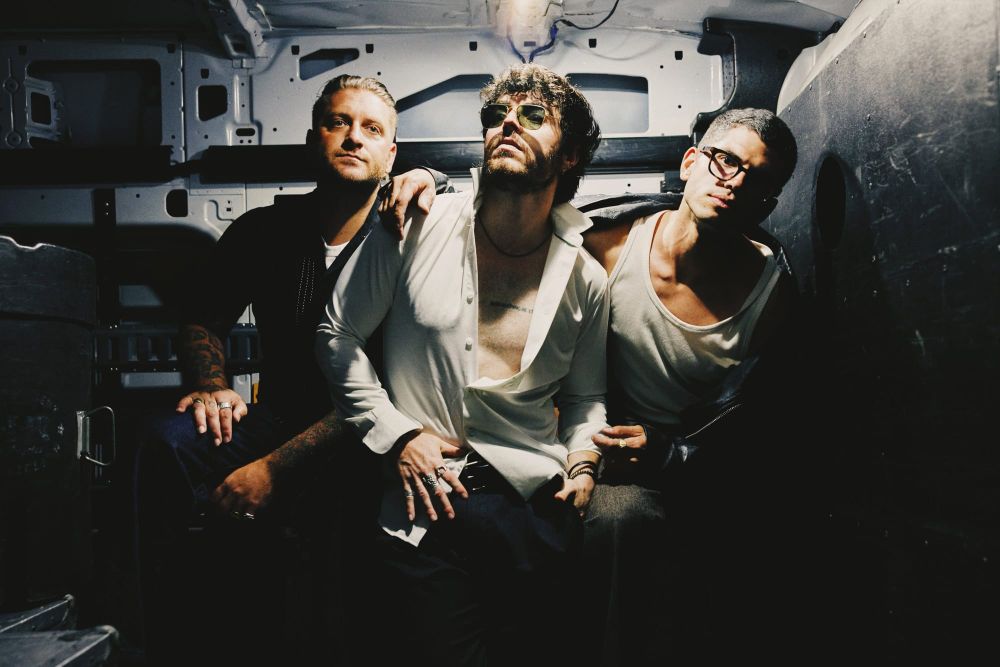
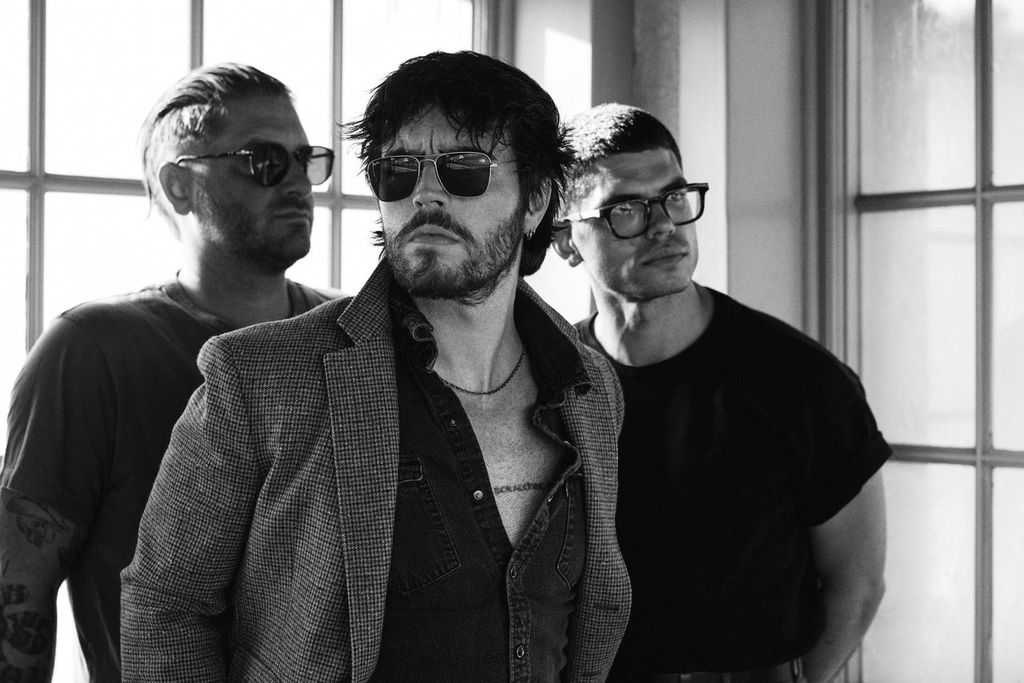
The self-titled album – out now via BMG, co-produced with hitmaker Marti Frederiksen (of Aerosmith and Ozzy Osbourne fame) – captures the explosive chemistry between Sam, guitarist John Newsome, and drummer Abel Tabares across twelve tracks of blown-out guitars, slammy-yet-smooth rhythms, and the kind of songwriting that only comes from souls who have genuinely lived and overcome obstacles that could have dismantled everything they'd worked towards. This album is the first real Nicotine Dolls record. Sam will tell you that himself.
Rorrie: "You just came off a UK tour — Glasgow, Manchester, London—selling out shows. And now the album is out tomorrow. How are you feeling?"
Sam: "I want to vomit. That’s probably the main feeling. It’s nerve-wracking on a couple of different layers. I like to think of this as our first album. The record we put out before feels very dating — it was very much me throwing spaghetti at a wall in my living room. You can hear the uncertainty. It’s not a bad record; I think it’s a good record, but it’s an uncertain record. It doesn’t know what it is. And that’s been a problem with the band for a while.
This past year has been very difficult because we’ve changed so much within the band — but it’s also been a real homecoming of why we initially started making music and what our goals were. Finally being in the band that you want to be in from the start. What that means is that it’s a very different sound. To me as a writer, it’s the most authentic thing I’ve ever done. But it’s so different from what we’ve done in the past that I get nervous. What if people don’t like it? I have to not think about that, because that’s not why we made this record. We very intentionally made this record for us — for what we wanted, what we had to say, and how we were feeling.
In my mind right now, the record comes out on Friday, so now I get to start writing the next one. That’s where my head’s at."
Rorrie - "You spent nearly three years busking in the NYC subway. What did those years teach you about connecting with people?"
Sam: "You have four minutes until the next train. Four minutes to get people’s attention — and hopefully they’d give you money, because that was the only job I had. I was eating off the dollars and the quarters and all of it. It was a brutal boot camp in how to hold an audience. How do you grab someone’s attention? How do you keep it?
It also taught me a lot about singing — I was down there for six hours at a time. How do you preserve your voice for that long? I was learning so much technique, learning who I was as a singer. That was the first time people started saying, 'Wow, what a great voice.'
It taught me humility. At any point I could be back there. I left high school when I was 17 to do this. Up until maybe two or three years ago, that was the only time I actually had a career doing it. It’s taken about 12 to 15 years. I’m 34. There are so many people in this industry now that either get handed this or get those instant TikTok moments. They don’t have those years of knowing what it is to fail miserably over and over. And when it finally happens — putting this record out is still very scary. I’ve always come from music in a place of trying to appease my own artistic desires while also not losing people. Because I’m so scared of going back to scrubbing toilets."
Rorrie: "You’d already finished a sophomore album — and then you scrapped it. What did it feel like to walk away from those finished songs?"
Sam: "We started planning for the second record when a lot of the cracks within the band started forming. Abel and I were having conversations about why this isn't fun anymore. We couldn’t agree on anything. We let go of our guitar player because of a big situation that forced us to make a tough decision. And when we were making what was going to be the record, I kept getting frustrated — this is more of the same. The intention was there, but the band couldn’t pull it off. I went in and rerecorded all the bass parts because none of them sounded right — but I’m not a bass player, so now you have mediocre bass playing. Nobody was excited.
What changed everything was going on tour in the middle of making that record with our new guitarist, John Newsome. We started playing the songs you play when you’re just hanging with your band — “Crying” by Aerosmith, “Whole Lotta Love," and “Cold Hard Bitch” by Jet. And we started having fun. I hadn’t had fun on stage in a couple of years. I talked to Abel and said, 'I think this guy is our guy. 'And I want to scrap the whole record. I want to feel this feeling. I want to go make a record where I don’t care what anybody thinks, other than what we think feels good.
Rorrie: "John tore through a guitar solo with bleeding fingers during recording. Which song was that?"
Sam: "The slide solo for 'Just Enough.' He’d ripped his fingernail off — his index finger, his main finger. He’s trying to play this thing with no fingernail, doing slide work and finger stuff in severe pain. He had to do it like nine times. Final take: you can literally see blood coming out of the bandage and onto the guitar. And that was the day it got really bad — most of the guitar stuff on this record is him playing through a bleeding, nail-less finger throughout. Our bass player Alex Saint Kitts did the whole UK tour with a tendon slipped in his middle finger, playing with a splint the entire time. Still sounded insane.
I know they’re going to put the music above everything. That’s what you want. That’s the only way you can enjoy making music together."
Rorrie: "You cried when you finished the album. What was that moment like?"
Sam: "Abel and I looked at each other, and we both just kind of went, 'Oh,' and teared up. Because we’ve been doing this thing for so long — making things that we all kind of felt whatever about at the end of the day. To make something that you love, that you worked really hard on, that you know is a huge risk — maybe people like it, maybe you lose fans — it’s such a departure for us. But it’s what feels right to us.
There’s a lot of emotion in all of that. Losing two of your friends in pursuit of music that actually means something to you. And the fact that we did it all together — everyone in that room every day for a month, all of us obsessed with the craft in front of us. It was beautiful. It was intense. We’re all so proud of each other."
Rorrie: "What do you hope listeners feel when the last track ends?"
Sam: "The thematic thread of the record is recognizing people in my life that are toxic, recognizing situations I’ve allowed to get to a place of hurting me — and being confident in your boundaries, but vulnerable enough to express why those boundaries exist.
A song like 'Enemy'— I never thought I would write that song. I never thought I’d feel sure-footed enough to tell someone: you can go f*** yourself, I didn’t do anything to you, and the fact that you blame me for your inability to take accountability for your own choices — that’s on you. “Gimme Sympathy” is about people I’ve allowed to leech on my empathy and take advantage of me. “I Wanted You to Know” is the first song I’ve ever written about my father and how fucked that situation became. There’s a line in that song: no matter what you do, no matter what you say, you can’t erase me. And I wanted you to know that I’m alive. This record consistently says that statement — I’m here, this is how I feel, and I’m not going to allow these things to run me over anymore.
And I think it’s important to say something about rock and roll right now. There are two documentaries I keep thinking about — the Sunset Marquee doc, which is the sex, drugs, and rock and roll TV-out-the-window mythology. And the Lilith Fair documentary, about Sarah McLachlan starting the first all-female-act festival in the early 90s. One of them says it’s rock and roll. The other one actually is. Those women created the first safe space not just for women at a festival, but for queer people too — in spite of all the criticism and all the people trying to shut them down. That’s pure rock and roll. Once we start appreciating that it’s not an aesthetic, it’s a mentality — a confidence, a lifestyle — that’s something that will never die. That’s what we tried to bring into this record."
Final Thoughts, My Dolls
“Nicotine Dolls” is out now via BMG — twelve tracks, fifteen years in the making, and a band that finally sounds exactly like itself. Sam Cieri spent a long time not knowing if any of this was going to work out. Listening to this record, it’s hard to imagine it going any other way.