

Artist management is one of the most essential roles in the music industry, but not everyone understands what it takes. Behind nearly every successful artist is someone working behind the scenes, balancing their creative vision with the actual business side of the industry. And few understand the weight of it all quite like Kyle Hulett of Cupid Theory.
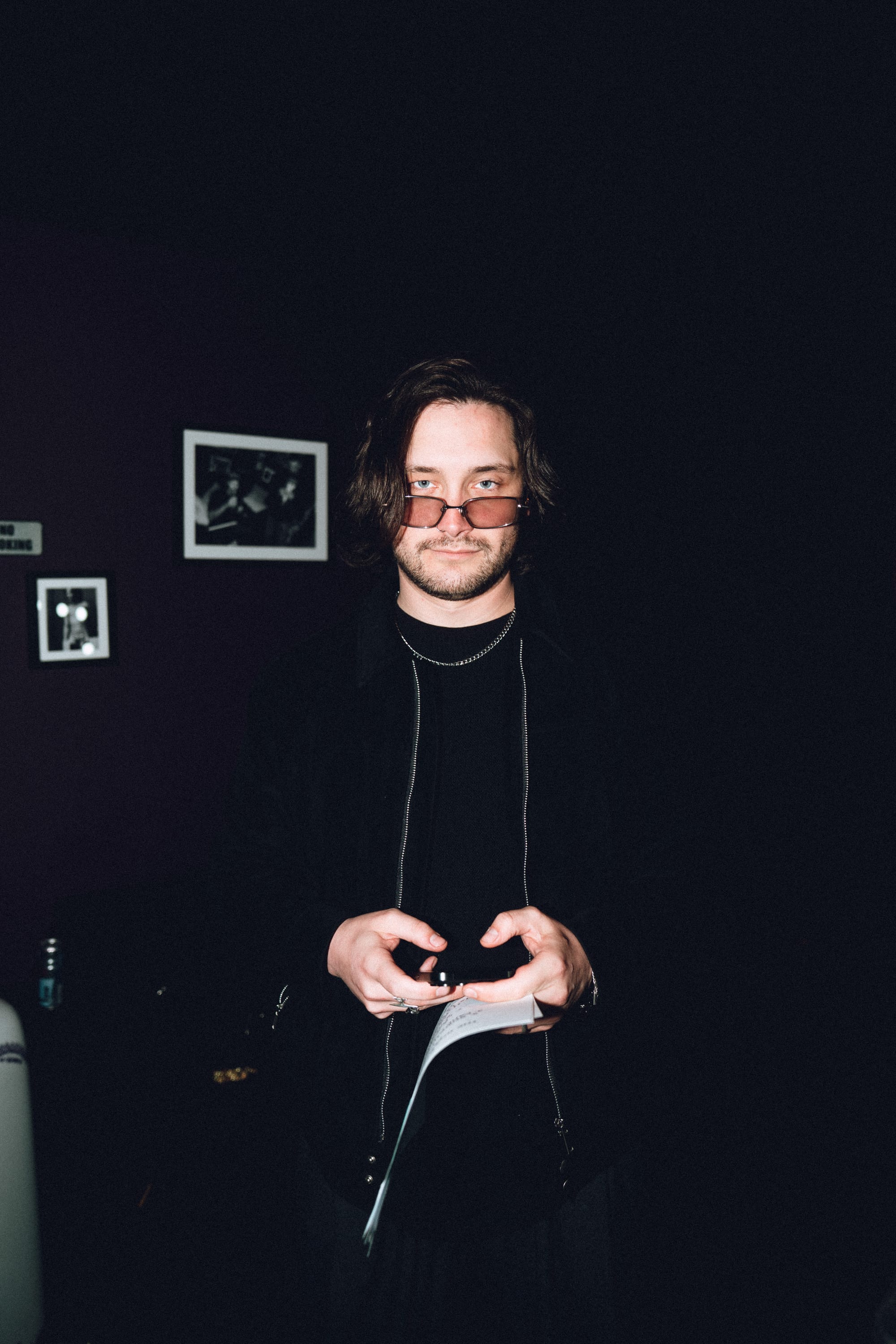
Hulett has spent his entire career honing his skills in every role in the industry that he could get his hands on. And now, as the founder and driving force behind Cupid Theory, he is turning the chaotic landscape of management, publicity, e-commerce, digital strategy, and design into a finely tuned art form.
We sat down with him to learn more about what artist management actually looks like day to day, what unexpected skills matter most, and his ultimate advice for anyone hoping to build a career managing in the alternative scene.
MSM: Did you always know that you wanted to work behind the scenes in music, and then was there something that pulled you towards artist management specifically?
KYLE: That's a great question. I would say that the answer is yes. For a while, I had people that really tried to push me in front of the scenes, and I think early on I ended up jumping into that for a little while, and I just found that I was really good and passionate about putting things together and making sure that they succeed and get involved. My parents were very involved in a local community children's theater. I just wanted to help build the sets, but my sister wanted to be one of the actors in it, so they asked me to audition with her, and they ended up casting me. I didn't really want to be involved, then suddenly I was on stage for seven years from there. After, I began helping bands, and then eventually people started asking me to play in the bands, so I was on the stage there for a while as well. Eventually, I just moved into the part that I felt really confident in, which was helping organize and keep things going and to just try to amplify the people around me.
MSM: How did you land your first opportunity?
KYLE: I made it. I think I've always been someone that has an idea and then just goes ahead and does it and puts it together. I have a lot of fun ideas and then decide to put them into practice as quickly as possible. I think my first opportunity to get involved with a charity was back in 2010 or 2011 or something like that, when there was a small initiative called Toms Shoes. I had found out about it through the internet and had decided that I wanted to help raise money for the organization. I knew a bunch of people in bands, so I rented out the front room in the children's theater that I worked in and invited a bunch of bands to bring people. They would buy the shoes up front, and for every pair of shoes that you bought, they donated another pair of shoes to somebody in need throughout the world. The idea was just to sit together and decorate all of the shoes while the bands played acoustic in that front lobby. From there, all the bands were like, "Hey, you're really good at putting together these events. We should do some more." I think one of the artists actually asked me to manage them, and that was right after their first event. I got into local concert promotions to put together my own concerts and managed some of the acts, not just one. I think I had that artist on my local radio station at a couple different stations from doing the morning shows with the children's theater. I knew the DJs and the radio hosts and was like, "I have this really great local artist; I would love to have them perform," and just continued to compound based off of the things that I had at my disposal.
MSM: Were there any skills that mattered early on that you wouldn't have expected?
KYLE: My mom taught me how to code on MySpace, and that became really important later and throughout the rest of my career, even to this day. I think when I started, this was all around the time I was 14 or 15 years old, when I was booking these first shows. I had gotten into an AP photo class, and I had a best friend that was in graphic design. I would sit in his graphic design class, and I would start designing all of my tour ad mats. Well, at this time, they were show posters and show ad mats and graphics and things like that, and I would design the MySpace pages. I would sit in there and learn how to get better at designing things, and he would sit in my photo class, and he ended up becoming a really incredible professional photographer. Design became a really big part of what I needed to learn to market things on MySpace or Pure Volume at the time. I would design layouts and promote the shows and invite people to the event pages.
MSM: What does a typical day look like for you, or does it vary?
KYLE: It definitely varies. My days are typically scheduled out a few weeks in advance, and today per se, I had a meeting at 9:00 AM with a new record label to help put together their digital marketing efforts to relaunch the label. I had a call at noon with a major label, because I do e-commerce marketing for their artists as well. Then, I try to fit lunch in there somewhere. I spent a bunch of time on the tour budgeting for Colorblind's latest tour and for Kami’s album release. By one o'clock, I had a meeting with a couple other managers for our new artist management division, looking at how we can share our resources and help each other to support our developing acts by leveraging our larger acts together. By 3:45, I had a meeting with a local coffee shop for our clothing brand, and for Kami as well, so that we can start building an event at the end of June. Not just to launch her new album, but also showcase the clothing brand that I have been developing the last couple years and retail a couple of the products in their store, so that we can continue building an immediate presence for the clothing brand in the immediate valley community as well. Now, I'm on a call with you.
MSM: And then, so what would make a band stand out to you other than good music?
KYLE: Great storytelling. I think storytelling and creativity are what drive culture. For the records I would consider, the visuals and storytelling are creative. Just their ability to immerse somebody in a universe that they're building with the records and the visuals is something that really stands out to me.
MSM: How has a DIY approach affected expectations for what you do?
KYLE: I've been DIY since the beginning, and I think that until you have a sustainable business, it's typically not the best scenario to be signed to a record label in a lot of ways unless that label really believes in you. Our company really believes in the DIY mentality of building it yourself and trying to build a sustainable business, build sustainable income and revenue, and make sure that you can pay your bills and pay your rent and survive off of your art before bringing in partners who are ultimately also looking for sustainable businesses that they can amplify and that they can inject resources into that already know how to run their business. So, if you don't know how to run your business and you're not running DIY from the ground up, you're also not a very good partner. We really believe in that DIY mentality, and then later down the road when it makes sense to partner on new initiatives, because you already understand what makes your business tick, those things are that much more powerful.
MSM: What has been one of the most rewarding moments of your career so far?
KYLE: I've had so many. I think every year since I got into this, I've found myself at the end of the year saying, "Holy crap, how does it just constantly continue to get bigger and more amazing and blow my mind even further?" We had our first Times Square billboard in December last year, and that was a pretty exciting moment for sure. We also played our first sold-out shows in Europe and the UK. One of the producers we manage and the artists that we manage put together a song maybe two or three years ago. To be able to go from sitting in there in that first session and talking to all the songwriters and talking to the producer and organizing the session, and then going to Europe to see them perform that song … to then hearing an entirely sold-out room in Manchester sing the song back to you is just so powerful that I cried. I think I filmed the performance, but I cried my eyes out on that stage that night.
MSM: Yeah, that's smart. And then obviously you're going to have bad days, so what keeps you passionate about your work even through those?
KYLE: I would say a lot of prayer and meditation. I try to write a gratitude list every day, and I share it with a bunch of other men who are trying to keep all of us in check with each other. When I wake up in the morning, I try to get really quiet before the day starts to get to me. I try not to look at my phone, and I'll spend anywhere from 5 to 10 minutes just to silence my thinking before I start my day. I'll do a little manifestation of asking the universe to help me help other people and just be the best person that I can be today. I'll write out a gratitude list of all the things that I am truly and deeply grateful for that are tangible in front of me at that exact moment, so that I can start my day in a place of contentment. That way, the highs as they come in and all these wins that come in become bonuses and not expectations. Then, the lows are also manageable, because I'm already pretty happy with the way things are.
MSM: And then I guess you've got the moments we talked about before, too — looking back at the amazing accomplishments that you've helped make happen for people.
KYLE: Well, it's a tough business, and sometimes as those big wins are happening, you're already six months ahead of them and planning the next thing. Those things in planning take so many different fire drills and complications to even get to that day. By the time you're on the day that you're supposed to be celebrating from six months ago, you're already six months ahead, trying to untangle the things ahead of you. It gets really important to try and find ways to ground yourself so that you can respect the wonderful things that come in.
MSM: For somebody that might want to get into management and just maybe even just the music industry in general, what would you suggest to them to get started?
KYLE: I think the best thing that you can do is to make yourself essential. Typically, if you want to get involved, you have to lead with an offer. So it's like, "Hey, I can do this thing, and I'm really good at it." Then, try and find people that are willing to give you a shot on that. That's really how everything that I've done has worked. When I first started promoting shows, I think people liked the idea, but those initial conversations were still like, “Why play a show for you when I can play a show for a bigger room or another promoter in the area?” So, I had to make that offering valuable to them before it was valuable to me. What I came in with was something like, "Hey, I'm close with the local radio station. I understand how you guys get paid from the other teams or the other promoters and other venues in the area, but I'll make sure that you get paid double and I'll get your song premiered on the radio. Then, I'm going to get you a homepage feature on this popular website that helps bands get signed." I was able to cut myself in so that I could walk away with some money, but I made sure that it was essential to them before it was essential to me. I think it’s about really finding a skill set that you really love doing and then finding a way to practice that with people. Actually, probably the best advice early on is to do everything for free and try to do every role possible… just try them all out and do the absolute best job that you can with them. If you really want to get into management, the best managers are often not the absolute best at any of their positions, but they've done all of the jobs, so they understand why they're hiring people to get in that boat. Your job is really to hire the best rowers, because you understand exactly what's supposed to happen in the job and let them row their ship and let them command their own lane. That's our style today. I try to look for the absolute best people in any given lane and then give them an opportunity that is beneficial to them before it is beneficial to us. I let them run their own lane, because I've done each of those jobs at one point. I was a booking agent for a while. I was a talent buyer and concert promoter. I still do a lot of digital marketing and advertising. I even did social media for a long time for some larger acts, and I gained those skill sets by essentially offering to do it for free until I really understood it. As long as you can make yourself essential to your community and make everything you do about being of service, the rest will come naturally.